It’s important to understand the educational rights of undocumented students today. Knowing the rules about public schools for these students is key.
Many wonder about the rights of undocumented students in the US. The truth is, they have the right to public education. But, the details can be tricky. The US Supreme Court has helped shape their educational rights.
Exploring this topic will give you a better understanding of the laws. You’ll see how these laws affect undocumented students in public schools. This knowledge is crucial for ensuring they get the education they need.
Contents
- 1 The Educational Rights of Undocumented Children in America
- 2 Can Illegal Immigrants Go to Public School? The Definitive Answer
- 3 Enrollment Requirements and Documentation for Undocumented Students
- 4 State-by-State Policies Affecting Undocumented Students
- 5 Challenges Faced by Undocumented Students in the Education System
- 6 Higher Education and Beyond: Options After K-12
- 7 Conclusion: The Future of Education for Undocumented Students
- 8 FAQ
- 8.1 Can undocumented students attend public schools in the US?
- 8.2 What documentation is required for undocumented students to enroll in public schools?
- 8.3 Are there any state-specific policies that affect the education of undocumented students?
- 8.4 Can undocumented students access higher education after completing K-12?
- 8.5 Are there any scholarship opportunities available to undocumented students?
- 8.6 What are some common challenges faced by undocumented students in the education system?
- 8.7 How do state-by-state policies impact the educational experiences of undocumented students?
The Educational Rights of Undocumented Children in America
Undocumented children in America have important educational rights. A key Supreme Court decision, Plyler v. Doe, protects these rights. This case, decided in 1982, ensures undocumented kids can go to public school like anyone else.
The Plyler v. Doe decision is a big deal. It says education is a basic right for all kids, no matter their immigration status. The court used the Fourteenth Amendment to make this ruling.
Because of this decision, schools can’t turn away students because of their immigration status. Schools also can’t ask about a student’s immigration status when they enroll. This means all kids, including undocumented ones, get free education from kindergarten to high school.
It’s key for undocumented families to know these rights to help their kids in school. Teachers and lawmakers need to understand these rights too. This helps everyone follow the law and support all students’ education.
Can Illegal Immigrants Go to Public School? The Definitive Answer
The Supreme Court’s decision in Plyler v. Doe was a big deal. It said undocumented kids can go to public school just like U.S.-born kids.
This ruling was a big win for undocumented students. It said schools can’t stop them from getting an education. This is because it goes against the Equal Protection Clause of the Fourteenth Amendment.
Now, undocumented students can go to K-12 public schools. Below is a table that shows their rights and what schools must do.
| Rights/Responsibilities | Description | Legal Basis |
|---|---|---|
| Enrollment Rights | Undocumented students have the right to enroll in public K-12 schools. | Plyler v. Doe |
| Documentation Requirements | Schools cannot require proof of citizenship or immigration status for enrollment. | Family Educational Rights and Privacy Act (FERPA) |
| Equal Access to Programs | Undocumented students are entitled to equal access to public education programs and services. | Equal Protection Clause of the Fourteenth Amendment |
It’s important to know these rights and what schools must do. This helps make sure undocumented students get the education they deserve. By understanding the law, families and teachers can create a welcoming school environment.
Enrollment Requirements and Documentation for Undocumented Students
Undocumented students in public schools need to follow certain steps to enroll. It’s important to know what these steps are to make the process easier.
Public schools ask for proof of age, where you live, and who you are. For undocumented students, this can be hard because of their immigration status. But, schools must let them enroll, no matter their status.
Here’s a quick look at what documents you might need:
| Document Type | Description | Acceptable Alternatives |
|---|---|---|
| Proof of Age | Birth certificate or passport | Hospital birth record, baptismal certificate |
| Proof of Residency | Utility bills, lease agreement | Letter from a homeless shelter, affidavit from a landlord |
| Proof of Identity | Passport, state ID | Consular ID, school ID from previous school |
It’s key to talk to the school district about their specific rules for enrolling. Knowing what you need and getting your documents ready can make things easier. Being well-prepared helps undocumented students enroll smoothly in public schools.
State-by-State Policies Affecting Undocumented Students
In the United States, each state has its own rules for educating undocumented students. These state-by-state policies greatly affect how these students learn and what opportunities they have.
Some states welcome undocumented students with open arms. They offer these students in-state tuition and state financial aid. For instance, California and New York let undocumented students pay in-state tuition. This makes going to college more affordable for them.
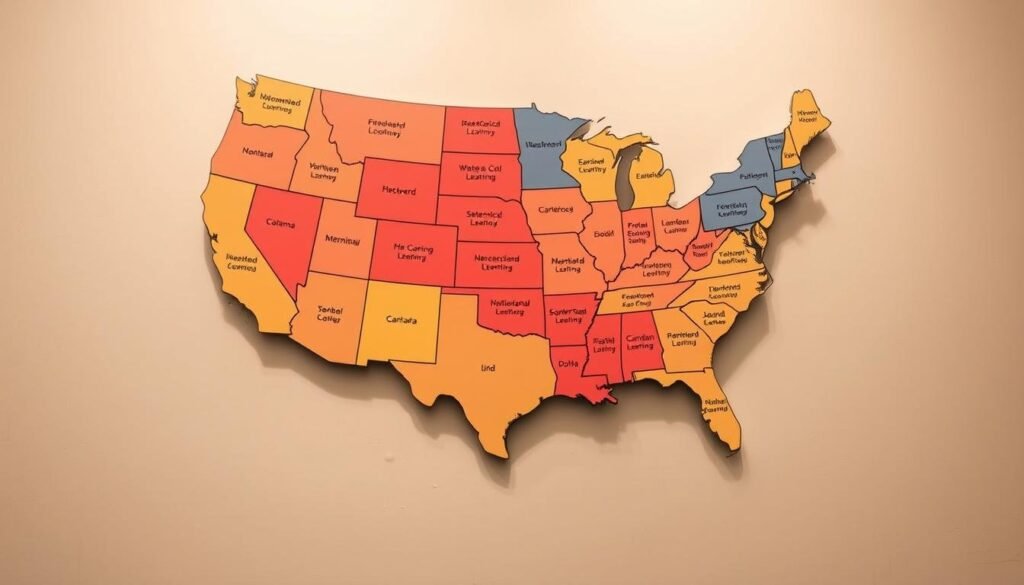
On the other hand, some states are less welcoming. They have rules that make it hard for undocumented students to get an education. These rules can hurt not just the students but also their families and communities.
It’s very important for undocumented students and their families to know about these immigration and education rules. Knowing what their state’s policies are helps them plan their future in school.
Challenges Faced by Undocumented Students in the Education System
Undocumented students face many challenges in school. These issues fall into social, emotional, and financial problems.
They often struggle to connect with their classmates because of their uncertain legal status. This can make them feel left out and alone. It’s hard for them to make close friends.
The stress of not having legal papers can be overwhelming. They worry about their future and fear being deported. Keeping their status a secret adds to their emotional burden.
Financially, they have a hard time getting the help they need. They can’t get federal financial aid. This makes it tough for them to pay for college.
| Challenge | Description | Impact |
|---|---|---|
| Social Isolation | Feeling disconnected from peers due to legal status | Difficulty forming relationships |
| Emotional Stress | Anxiety and fear related to legal status | Mental health issues |
| Financial Barriers | Lack of access to federal financial aid | Difficulty affording education |
It’s important for teachers and lawmakers to understand these challenges. They need to create supportive policies and programs for these students.
Higher Education and Beyond: Options After K-12
The journey to higher education can be tough, but undocumented students have many chances after K-12. You can go to college, and there are many resources to help you.
Many schools have special programs for undocumented students. These programs give you the tools you need to do well. Look into these options to find the right one for your goals.
Scholarship Opportunities
Scholarships are key for undocumented students. Groups like TheDream.US and the Hispanic Scholarship Fund help with college costs. You can also look for local and national scholarships that fit your needs.
- Private scholarships
- Institutional scholarships
- State-funded scholarships
Career Pathways
After college, you can look into many career paths. Fields like healthcare, tech, and education have lots of chances for growth. You might also want to try internships or vocational training for hands-on experience.
- Professional certifications
- Networking opportunities
- Career counseling services
Conclusion: The Future of Education for Undocumented Students
The future of education for undocumented students depends on many things. This includes state policies and access to higher education. As immigration laws change, it’s key to meet the educational needs of this group.
Ensuring undocumented students get quality education can greatly benefit them and society. By knowing the challenges they face and the options they have, we can create better learning spaces. The future of their education will be influenced by debates on immigration and education policy.
FAQ
Can undocumented students attend public schools in the US?
Yes, undocumented students can go to public schools in the US. This is thanks to the Supreme Court’s Plyler v. Doe decision.
What documentation is required for undocumented students to enroll in public schools?
Schools ask for proof of where you live, your age, and that you’re vaccinated. Undocumented students can use things like a consular ID or birth certificate to meet these needs.
Are there any state-specific policies that affect the education of undocumented students?
Yes, some states help undocumented students by offering in-state tuition or financial aid. But, other states have stricter rules.
Can undocumented students access higher education after completing K-12?
Yes, undocumented students can go to college. But, they often face hurdles because of their immigration status.
Are there any scholarship opportunities available to undocumented students?
Yes, some groups and schools give scholarships to undocumented students. But, these chances are not always easy to find.
What are some common challenges faced by undocumented students in the education system?
Undocumented students deal with many issues. These include social, emotional, and financial problems. They might lack access to resources, fear deportation, and struggle financially.
How do state-by-state policies impact the educational experiences of undocumented students?
State policies greatly affect undocumented students’ education. Some states are more supportive, while others are more restrictive.
Hello, I am Deborah Moreno from Tennessee, US. I worked as an Immigration Officer at U.S. Citizenship and Immigration Services (USCIS) for 23 years. Here, I share insights and solutions to help undocumented immigrants navigate challenges effectively.