Do Illegal Immigrants Get Free College Tuition? The question of whether undocumented students can get in-state tuition rates or free college tuition is complex. It involves understanding the legal framework surrounding these individuals.
Exploring this topic, you’ll find that laws and policies on higher education for undocumented students differ greatly. Each state has its own rules.
Some states allow undocumented students to pay in-state tuition, while others do not. This article will look at the current situation. We’ll discuss the different ways states handle this issue and the costs of college for these students.
Understanding free college tuition for undocumented students gives you a deeper look at higher education access. It shows the broader implications of these policies.
Contents
- 1 The Current Landscape of College Tuition for Undocumented Students
- 2 Understanding the Legal Framework: DACA and Beyond
- 3 States That Offer In-State Tuition to Undocumented Students
- 4 States That Prohibit Benefits for Undocumented Students
- 5 Do Illegal Immigrants Get Free College Tuition Anywhere in the U.S.?
- 6 The Reality of College Costs for Undocumented Students
- 7 Private Scholarships and Alternative Funding Sources
- 8 Community Colleges and Vocational Training Options
- 9 Recent Policy Developments and Ongoing Debates
- 10 Common Misconceptions About Undocumented Students and College Funding
- 11 Conclusion: Navigating College Options as an Undocumented Student
- 12 FAQ: Do Illegal Immigrants Get Free College Tuition?
- 12.1 What is the current policy on college tuition for undocumented students in the United States?
- 12.2 How does the Deferred Action for Childhood Arrivals (DACA) program affect college tuition for undocumented students?
- 12.3 Which states offer in-state tuition to undocumented students?
- 12.4 Are there any states that prohibit in-state tuition for undocumented students?
- 12.5 Can undocumented students receive free college tuition anywhere in the United States?
- 12.6 What are the eligibility criteria for private scholarships for undocumented students?
- 12.7 How do community colleges and vocational training programs benefit undocumented students?
- 12.8 What recent policy developments have affected college tuition for undocumented students?
- 12.9 What are some common misconceptions about undocumented students and college funding?
The Current Landscape of College Tuition for Undocumented Students
Exploring college funding for undocumented students shows how state policies matter a lot. The cost of college varies across the United States. Some states are more welcoming than others.
Right now, college tuition rules for undocumented students differ from state to state. Some places let them pay in-state tuition, making college cheaper. For example, California and New York have such laws, helping undocumented students get a good education at a lower cost.
But, other states have tougher rules, making it harder for undocumented students to afford college. This mix of policies makes it tough for undocumented students to reach their educational dreams.
It’s key to know the rules in your state about college tuition for undocumented students. Knowing these laws helps you plan your future in education.
The differences in state policies show the importance of undocumented students being proactive. By seeking out resources and information, you can better understand college funding. This way, you can take advantage of the opportunities available to you.
Understanding the Legal Framework: DACA and Beyond
The Deferred Action for Childhood Arrivals (DACA) program is key to understanding college tuition for undocumented students. Introduced in 2012, DACA offers temporary relief from deportation and work authorization. It helps certain young undocumented immigrants who arrived in the United States as children.
To qualify for DACA, applicants must meet specific criteria. These criteria are crucial for determining who can benefit from the program.
Eligibility Criteria for DACA
- Be under 31 years old as of June 15, 2012
- Have arrived in the United States before their 16th birthday
- Have continuously resided in the United States since June 15, 2007
- Be in school, have graduated from high school, or have obtained a General Education Development (GED) certificate
- Not have been convicted of a felony, significant misdemeanor, or three or more other misdemeanors
DACA recipients, known as “Dreamers,” can access certain benefits. This includes the possibility of in-state tuition in some states. The impact of DACA on college tuition varies by state, with some offering more generous benefits than others.
| State | In-State Tuition for DACA Recipients | Additional Benefits |
|---|---|---|
| California | Yes | State financial aid available |
| Texas | Yes | Eligible for state-funded programs |
| New York | Yes | Access to state scholarships |
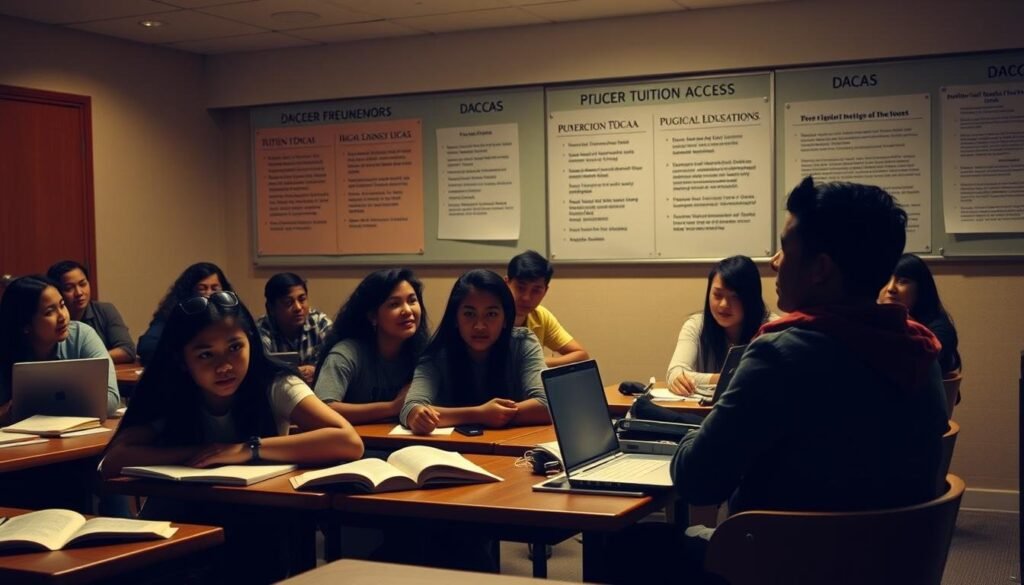
The Deferred Action for Childhood Arrivals (DACA) program has greatly impacted education for undocumented students. By knowing DACA’s eligibility and benefits, you can better understand college tuition.
States That Offer In-State Tuition to Undocumented Students
Many states now offer in-state tuition to undocumented students. This makes higher education more affordable for them. It helps them reach their academic goals without the high costs of out-of-state tuition.
Currently, several states have laws that let undocumented students pay in-state tuition. These include:
- California
- Texas
- New York
- Illinois
- Washington
Each state has its own rules for undocumented students to get in-state tuition. Some require students to have gone to school in the state for a few years. Others ask for proof of living there.
- California: Students must have gone to a California high school for at least three years. They must also have graduated from a California high school or gotten a GED there.
- Texas: Students need to have lived in Texas for at least three years. They must also have graduated from a Texas high school.
- New York: Undocumented students can get in-state tuition if they went to a New York high school for two years. They must also have graduated.
These policies show a growing effort to make college more accessible to undocumented students. By offering in-state tuition, these states help close the education gap.
As immigration laws change, it’s crucial for undocumented students to know their options. Understanding the rules for in-state tuition in their state helps them on their path to college.
States That Prohibit Benefits for Undocumented Students
Some states don’t offer tuition benefits to undocumented students. They argue it’s not right under federal laws or that it’s unfair to taxpayers.
States like Alabama, Arizona, Georgia, Indiana, and South Carolina have laws against these benefits. This makes it hard for undocumented students to go to college.
- Alabama
- Arizona
- Georgia
- Indiana
- South Carolina
These laws make college harder to get for undocumented students. It limits their chances to reach their educational dreams.
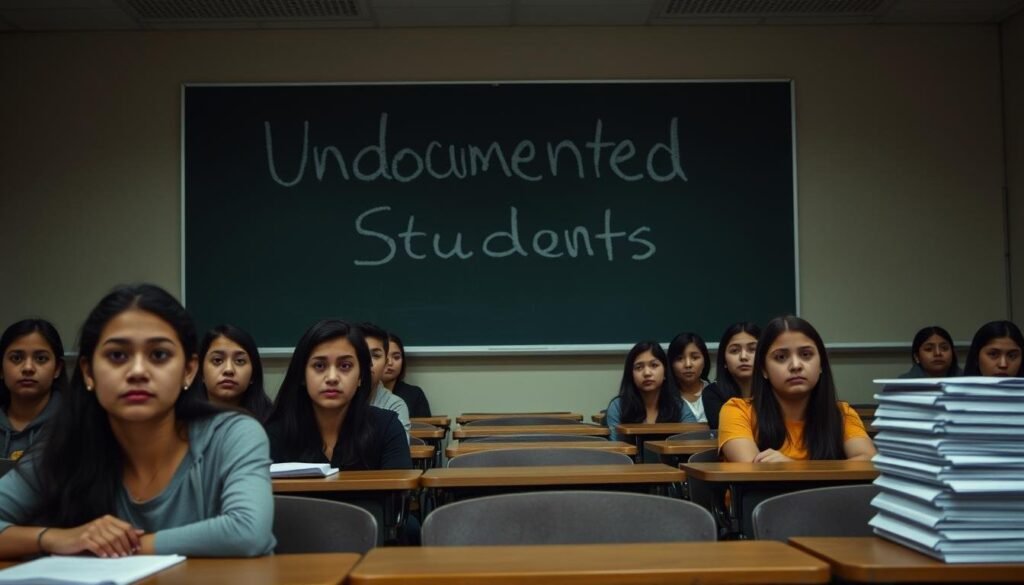
It’s important for undocumented students and their families to know about these laws. They help understand the challenges in getting college funding.
Do Illegal Immigrants Get Free College Tuition Anywhere in the U.S.?
Some states offer in-state tuition to undocumented students. But, does any state provide free college tuition? The answer depends on understanding tuition policies across the U.S. and finding states with free or reduced tuition.
Several states have made college more affordable for undocumented students. Their policies vary. Some offer in-state tuition, while others provide financial aid.
| State | Tuition Policy for Undocumented Students | Additional Benefits |
|---|---|---|
| California | In-state tuition available | State-funded financial aid available |
| New York | In-state tuition available | Excelsior Scholarship for free tuition in state colleges |
| Texas | In-state tuition available | Some private scholarships available |
The table shows states like California, New York, and Texas offer in-state tuition to undocumented students. New York’s Excelsior Scholarship stands out. It offers free tuition to students in state colleges.
While free college tuition for undocumented students is rare, these states are making strides. It’s key for students to check their state’s policies and financial aid.
For undocumented students looking for free college tuition, researching state programs and private scholarships is crucial. These can help cover education costs.
The Reality of College Costs for Undocumented Students
Going to college as an undocumented student is very expensive. They pay more for tuition and have less access to financial aid than others.
College costs for undocumented students include tuition, fees, and living expenses. Here are some main reasons for the high costs:
- Higher tuition rates because they can’t get in-state tuition in some states
- Less access to federal financial aid and scholarships
- Higher fees for being international or out-of-state students
- Expenses like housing, food, and transportation
To deal with these costs, undocumented students turn to private scholarships and community help. Some states also offer policies to help make college more affordable for them.
It’s important for undocumented students to understand the financial side of college. By looking into resources and support, they can handle the costs of higher education better.
Private Scholarships and Alternative Funding Sources
Private scholarships and other funding options are key for undocumented students wanting to go to college. Since they can’t get federal aid, these resources are crucial. They help students who want to learn despite the obstacles they face.
Undocumented students can look into private scholarships. Groups like TheDream.US and the Hispanic Scholarship Fund give out a lot of money. These scholarships can pay for tuition, living costs, and more.
Eligibility Criteria for Private Scholarships
The rules for getting private scholarships vary a lot. Some need a good GPA, while others want community service or leadership. For example, TheDream.US looks for students who have been in a U.S. high school for three years and need money.
To boost their chances, undocumented students should:
- Look for scholarships early and carefully.
- Make sure they qualify before applying.
- Get ready with strong applications, like personal statements and letters of recommendation.
There are also other ways to get money, like institutional aid and community programs. Some schools give their own scholarships to undocumented students. This can really help.
By checking out these options and applying, undocumented students can get the money they need for college.
Community Colleges and Vocational Training Options
Community colleges and vocational training are great for undocumented students. They offer lower tuition and flexible schedules. This makes it easier to study while handling other duties.
Some benefits of community colleges include:
- Affordable tuition rates, sometimes even in-state tuition for illegal immigrants
- Flexible scheduling, including evening and online classes
- A wide range of programs, from liberal arts to vocational training
Vocational training programs give you hands-on experience. You learn skills that are useful in the job market. You can get training in:
- Healthcare and medical assistance
- Skilled trades, like electrical work and plumbing
- Technology and IT support
Exploring these options can help you reach your educational and career goals. Community colleges and vocational training are made to be accessible and supportive. They help you succeed.
Recent Policy Developments and Ongoing Debates
Policy changes keep affecting DACA students’ ability to afford college tuition. It’s important to keep up with these updates. They can greatly impact undocumented students wanting to go to college.
Recently, some states have made big moves. They’ve made sure DACA students can pay in-state tuition. This is a big win for undocumented students who want to go to college.
But, not all states are on board. Some are trying to limit in-state tuition for undocumented students. This creates a patchwork of rules across the country. The fight in Congress over the DREAM Act and DACA students’ rights also matters a lot.
DACA students and their supporters need to stay in the loop. Knowing about these changes helps them navigate the system. It also helps them fight for policies that support their education goals.
Common Misconceptions About Undocumented Students and College Funding
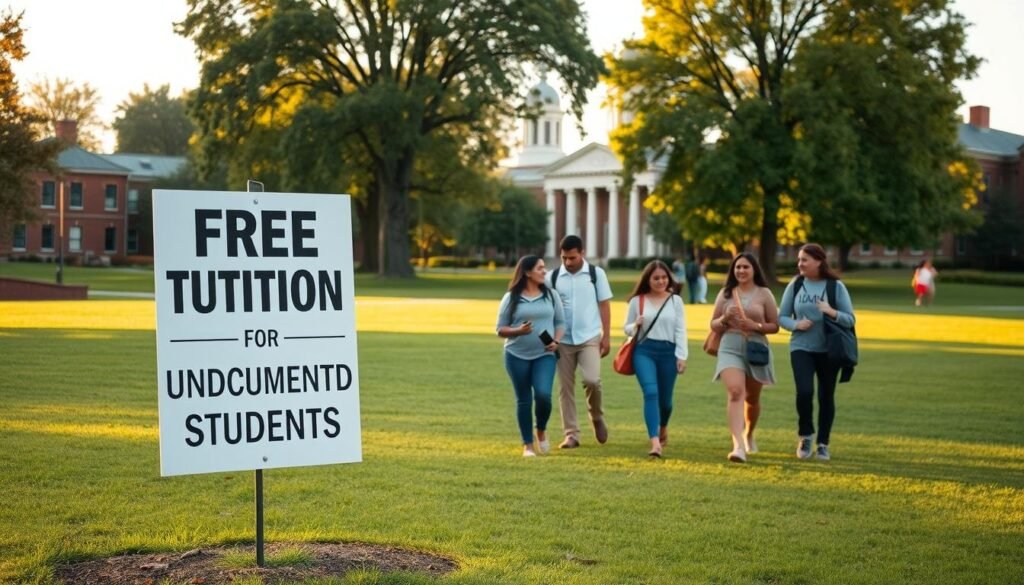
Many people think undocumented students can go to college for free. But, the truth is more complicated. Whether or not undocumented students can get free or low-cost tuition depends a lot on the state they live in.
In some states, undocumented students can pay in-state tuition. But, in other states, they face barriers. Even in states that are more open, getting federal financial aid can still be tough.
| State | In-State Tuition for Undocumented Students | Additional Benefits |
|---|---|---|
| California | Yes | State financial aid available |
| Texas | Yes | Some private scholarships available |
| Alabama | No | Limited to no additional benefits |
It’s important for undocumented students to understand these details. While some states offer more help, the situation is still complex.
By clearing up these myths, undocumented students can make better choices about college funding.
Understanding college costs as an undocumented student is complex. You’ve looked at state policies, financial hurdles, and funding options. Knowing about college funding for undocumented students and undocumented students college costs is key.
By studying state policies and financial aid, you can find the best way to pay for college. Options include private scholarships, community colleges, and vocational training. These paths help you reach your educational goals, even with immigration status challenges.
Staying updated on policy changes and debates is important. This knowledge helps you use available opportunities and fight for your rights in higher education.
See Also: What Happens If an Illegal Immigrant Has a Child?
FAQ: Do Illegal Immigrants Get Free College Tuition?
What is the current policy on college tuition for undocumented students in the United States?
The policy on college tuition for undocumented students changes by state. Some states offer in-state tuition rates, while others do not.
How does the Deferred Action for Childhood Arrivals (DACA) program affect college tuition for undocumented students?
DACA lets eligible undocumented students get in-state tuition in some states. It also offers other benefits. But, its effect on tuition varies by state.
Which states offer in-state tuition to undocumented students?
States like California, New York, and Texas offer in-state tuition to undocumented students. They must meet certain requirements.
Are there any states that prohibit in-state tuition for undocumented students?
Yes, states like Arizona and South Carolina have laws against in-state tuition for undocumented students.
Can undocumented students receive free college tuition anywhere in the United States?
No state offers completely free college tuition to undocumented students. But, some states have lower tuition rates or financial aid.
What are the eligibility criteria for private scholarships for undocumented students?
Private scholarships for undocumented students have different rules. They often require students to be in a U.S. college, show financial need, and meet certain academic standards.
How do community colleges and vocational training programs benefit undocumented students?
Community colleges and vocational training are affordable for undocumented students. They have lower tuition and flexible schedules, making education more accessible.
What recent policy developments have affected college tuition for undocumented students?
Recent laws and debates have changed college tuition policies for undocumented students. Some states have expanded benefits, while others have restricted them.
What are some common misconceptions about undocumented students and college funding?
Many think undocumented students get no financial aid or in-state tuition. But, policies really vary by state.

Hello, I am Deborah Moreno from Tennessee, US. I worked as an Immigration Officer at U.S. Citizenship and Immigration Services (USCIS) for 23 years. Here, I share insights and solutions to help undocumented immigrants navigate challenges effectively.